Authority is not something you claim, it is something the market concludes about you. Consistent media placement is how Bangladeshi brands earn that conclusion, one credible mention at a time.
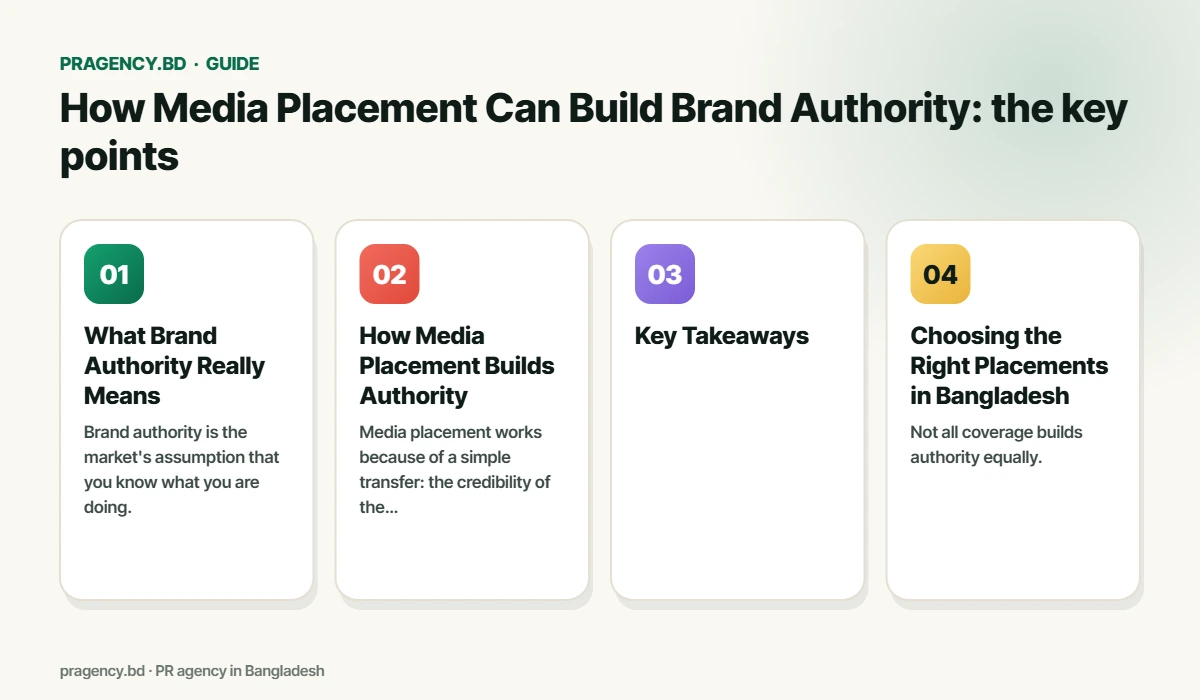
What Brand Authority Really Means
Brand authority is the market’s assumption that you know what you are doing. It shows up in practical ways: buyers trust you faster, journalists take your calls, talent wants to join, and partners treat you as a serious player.
Advertising can buy attention, but it cannot buy that assumption, audiences know the difference between a paid message and editorial judgment. That is why established companies in Bangladesh’s most competitive sectors, ecommerce, fintech, RMG, real estate, education, healthcare, invest in being covered rather than only being visible.
Authority also compounds. A brand mentioned once is a brand people saw; a brand placed consistently in credible media is a brand people assume is important. The gap between those two is the gap between a campaign and a reputation.
How Media Placement Builds Authority
Media placement works because of a simple transfer: the credibility of the outlet flows to the brands it covers. But only certain kinds of placements transfer well.
Third-party validation
When The Daily Star or Prothom Alo describes what your company does, readers treat that description as verified. You are not the source of the claim, a newsroom with its own reputation on the line is. For any brand where trust drives the purchase decision, this is the most valuable thing placement can do.

Discoverability at the moment of research
Authority only matters if people encounter it. Placed articles rank in search results, appear when someone researches your category, and surface again when a journalist or investor searches your name. Each placement adds another credible result to that picture.
Consistency signals momentum
A single feature is an event. A steady presence across relevant outlets, business pages one month, a sector story the next, expert commentary after that, signals a company that is active and important. This is why one-off bursts of coverage rarely build lasting authority; rhythm does.
Association by context
Where you appear shapes how you are perceived. Being quoted alongside established players in your sector, or featured in the business pages of respected Bangladeshi dailies, quietly positions you at their level. Choosing that context deliberately is one of the most powerful moves in media placement strategy.
Key Takeaways
| Point | What it means for your brand |
|---|---|
| Authority is borrowed, then owned | Every placement borrows the outlet’s credibility. Enough credible placements, and the market starts extending that credibility to you directly. |
| Rhythm matters more than bursts | Consistent coverage over months builds more authority than a single splashy week. Plan placements like you plan any long-term asset. |
| Context is a positioning tool | The outlet, the section, and the company you keep in an article all communicate where your brand belongs. Choose placements deliberately. |
Choosing the Right Placements in Bangladesh
Not all coverage builds authority equally. The right placement matches your audience, your goal, and the story you have to tell.
- National dailies and their portals, Prothom Alo, The Daily Star, Kaler Kantho, Ittefaq, Jugantor, offer breadth and prestige, ideal for launches and major milestones.
- Business and economy desks, the natural home for growth stories, sector analysis, and leadership commentary.
- Television and video news, Jamuna TV, Ekattor, Somoy TV, Channel i, NTV, add visual credibility and reach audiences who consume news on air and on social video.
- Digital-native outlets, bdnews24, Bangla Tribune, Dhaka Tribune, provide speed and shareability when a story is moving.
- Trade and sector media, for RMG, real estate, education, or healthcare brands, depth in front of the right industry readers often beats mass reach.
The mix should reflect where your buyers, partners, and talent actually pay attention. For many Bangladeshi brands, that mix evolves over time, mass visibility at launch, then deeper sector placements as the company matures. Editorial-style placements that tell a fuller story also work well through news feature articles, which give room for the context a brief news mention cannot carry.
Making Each Placement Work Harder
A placement is an asset. Most brands use it once and let it expire. Authority-minded brands recycle every coverage moment across every channel where trust is decided.
1. Build a press page
Keep every placement, with logos, links, and short context, on your website. This is the first thing a journalist, investor, or enterprise buyer will look for.
2. Feed it to sales and fundraising
A news link in a proposal, tender response, or investor update does work no sales deck can: someone else vouches for you.
3. Extend it on social media
Share placements with a note on why the story matters. Your team’s networks amplify the reach, and the coverage keeps working long after publication day.
4. Turn coverage into the next story
Journalists read each other. One placement often leads to inbound requests, respond quickly, and treat every interview as the start of a relationship, not a one-time transaction.
Coordination across these touchpoints is where an experienced PR agency in Bangladesh adds the most value, turning separate placements into a visible pattern of authority.
A Simple Placement Framework
If you are starting from zero, you do not need a giant campaign. You need a plan you can sustain.
Start by defining what you want to be known for, one clear position, not five vague ones. Then map the stories your company can genuinely tell over the next two quarters: milestones, launches, data, and expert commentary. Match each story to the right outlet type, and set a realistic rhythm of placements that your team (or your agency) can keep.
Budgets vary widely depending on whether you need strategy only, full story development, or coordinated distribution. Our press release pricing guide gives a transparent starting point, and ongoing ideas and angles are covered regularly on our PR insights blog.
The brands that win on authority are rarely the ones with the single biggest campaign. They are the ones that keep showing up in the right places until the market assumes they belong there.
Frequently Asked Questions
How is media placement different from advertising?
Advertising is paid space you control entirely; media placement is earned or editorial coverage that an outlet chooses to publish. Because placement involves independent editorial judgment, audiences and search engines treat it as more credible.
How many placements does it take to build brand authority?
There is no fixed number, authority is about patterns, not totals. A consistent presence across several relevant outlets over a few months does more than a single high-profile feature.
Which Bangladeshi outlets should a new brand target first?
It depends on your audience. Consumer brands often start with high-reach dailies and TV portals, while B2B and sector brands may get better results from business desks and trade media. The right first placement is the one your actual buyers read.
Can small businesses benefit from media placement?
Yes. Authority is relative to your market, and local or sector-focused coverage can be very powerful for SMEs. A well-told story from a small company can outperform a routine announcement from a large one.
What should I do right after a placement goes live?
Share it across your channels, add it to your website’s press page, brief your sales team to use it, and thank the journalist. Then start thinking about the next story while the relationship is warm.
Let’s Build Your Brand’s Authority
If you want to be known for something specific in your market, media placement is the most credible path there. Book a free consultation and we will map which stories and outlets fit your brand.
Book a Free 30-Minute PR Consultation or get a quote →