Healthcare PR in Bangladesh helps hospitals, clinics and doctors earn patient trust through accurate, ethical coverage: specialist interviews, health awareness campaigns, new service launches and TV health programmes. It never promises cures or outcomes, protects patient privacy and has every claim reviewed by doctors.
Why patients research before they choose
Choosing a hospital or doctor is one of the most important decisions a family makes. In Bangladesh, patients ask relatives, read Facebook comments and search names on Google before booking. Credible media coverage, a specialist quoted in a national daily or a doctor explaining a condition on TV, builds trust long before someone needs care.
What healthcare PR includes
| Activity | Purpose | Example |
|---|---|---|
| Specialist interviews | Show expertise | A cardiologist explains heart attack warning signs |
| Health awareness campaigns | Serve the public, build familiarity | World Diabetes Day screening camp |
| Service launches | Explain new capabilities | A new cath lab or cancer unit opens |
| TV health programmes | Reach families nationwide | A paediatrician answers parents’ questions |
| Reputation management | Respond to concerns | Factual reply to a viral complaint |
The ethics of medical communication
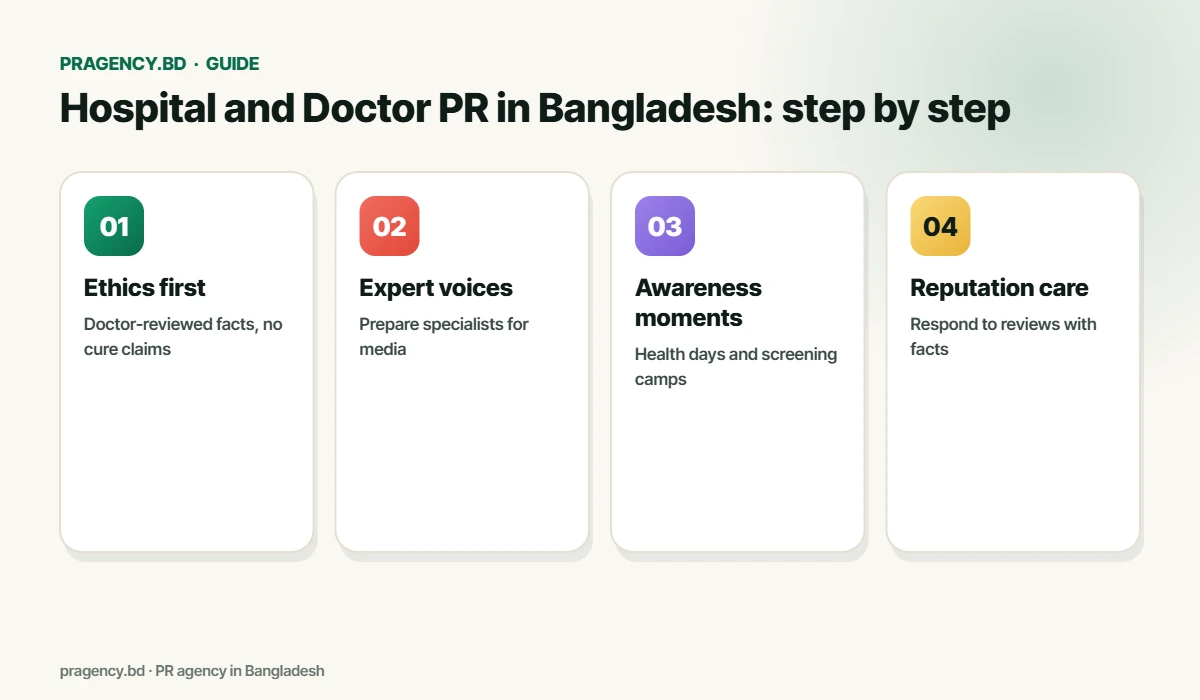
Healthcare communication carries special responsibility. A misleading health claim can harm people. Responsible PR follows clear rules:
- Never promise cures, guaranteed outcomes or “miracle” treatments.
- Have doctors review every medical statement before publication.
- Protect patient privacy; feature patients only with informed consent.
- Educate first: symptoms, prevention and when to see a doctor.
- Avoid fear-based messaging that pressures people into treatment.
If a sentence would make a doctor uncomfortable in front of a medical council, it does not belong in your PR.
Doctors as trusted media experts
Journalists covering health stories need reliable, available experts. Preparing your specialists for interviews, with simple explanations, clear advice and calm answers, makes your hospital the first call when health is in the news. For individual doctors, this is also the foundation of a strong personal brand and, over time, a Google Knowledge Panel.
Awareness days and screening camps
Health awareness days are natural news moments: World Health Day, World Heart Day, World Diabetes Day, breast cancer awareness month and more. A free screening camp with a doctor available for interviews gives media a reason to cover you while genuinely serving the community.

Handling complaints and negative coverage
Every hospital faces complaints. Respond quickly and respectfully, investigate, share facts that can be shared without breaching privacy, and explain what you are changing. Defensive or aggressive responses usually make the story bigger.
A simple 6-month plan
- Month 1: audit online reputation and prepare three specialist spokespeople.
- Month 2: launch a health awareness campaign around a relevant health day.
- Month 3: publish two expert articles in national media.
- Month 4: pitch a TV health programme appearance.
- Month 5: announce a new service or technology with a press release.
- Month 6: review coverage and patient feedback; plan the next cycle.
- Patients trust hospitals and doctors they have read about.
- Never promise cures; have doctors review every claim.
- Specialists as media experts build lasting credibility.
- Awareness days are ethical, effective news hooks.
- Respond to complaints with facts and respect.
Explore our hospital PR and doctor PR services.
Example: launching a new cardiac unit
A hospital in Dhaka opens a new cardiac catheterisation lab. A weak announcement lists the equipment brand and thanks the board. A strong communication plan looks like this:
- A press release in Bangla and English explaining what the unit does, who it helps and how patients can access it.
- An interview with the lead cardiologist explaining heart attack warning signs and why fast treatment matters.
- Photo cards with simple advice: “Chest pain lasting more than 15 minutes? Go to the nearest emergency.”
- A free blood pressure screening event on World Heart Day, with media invited.
- A follow-up feature after three months, with permission from recovered patients.
This approach serves the public, builds trust and gives media a genuine reason to cover the launch.
Building a doctor’s personal reputation
| Step | Action | Result |
|---|---|---|
| Profile | Clear bio, qualifications, chambers on one official page | Patients find accurate information |
| Expert content | Short articles on common conditions in Bangla | Recognised as a helpful expert |
| Media | Interviews and expert quotes in national media | Wider credibility |
| TV | Health programme appearances | Familiarity across the country |
| Consistent profiles and schema | Clean search results and possible knowledge panel |
Writing health content patients understand
- Use everyday Bangla, not medical jargon.
- Explain symptoms, prevention and when to see a doctor.
- Avoid diagnosing through articles; encourage consultation.
- Add a short note on who reviewed the content and their qualifications.
Online reviews and Facebook comments
Patients increasingly leave reviews on Google and Facebook. Respond politely to every serious complaint, move details to private channels to protect privacy, and fix genuine problems. A professional, caring reply is read by many future patients and often matters more than the original complaint.
Never confirm or discuss a patient’s medical details publicly, even when replying to their own complaint.
Common mistakes in healthcare PR
- Before-and-after photos without consent or with misleading framing.
- Claims such as “100% success” or “guaranteed cure”.
- Promoting discounts more than quality of care.
- Letting several departments speak to media with different messages.
- Ignoring online reviews until they become a news story.
Measuring results
Track media coverage, appointment enquiries after campaigns, growth in searches for the hospital and specialists’ names, and the tone of online reviews. Over time, the best indicator is when journalists call your specialists first for health stories.
Getting started this month
For hospitals and doctors, the first month should focus on accuracy and preparation.
- Check that every doctor’s name, qualifications and chambers are correct on the hospital website and Google listing.
- Choose two specialists who are comfortable speaking to media and brief them on simple, clear explanations.
- Pick the next relevant health awareness day and plan a screening camp or advice campaign around it.
- Write one patient-friendly article in Bangla on a common condition, reviewed by a doctor.
- Prepare short, respectful templates for responding to online reviews.
These steps build the foundation for trusted coverage and protect the hospital’s reputation from the start.
Frequently asked questions
Is it ethical for doctors to do PR?
Yes, when it educates the public and avoids exaggerated or misleading claims.
Can you get our doctors on TV?
We pitch relevant health programmes; channels make the editorial decision.
Do you write in Bangla?
Yes. Most patient-facing health content works best in Bangla.
How do you handle a viral complaint?
With a quick, respectful, factual response, and longer-term positive coverage.
Build patient trust the right way
Talk to our Bangladesh PR team about your story, the right media and a realistic plan.
Book a Free 30-Minute PR Consultation or get a quote →