A Google Knowledge Panel is the information box Google shows for well-known people, brands and organisations. You cannot buy one. You can make one far more likely by building consistent, trusted signals: a clear About page, structured data, consistent profiles and in-depth coverage on established Bangladeshi news sites.
What a knowledge panel is
When someone searches a well-known name on Google, a box often appears beside or above the results with a description, a photo or logo, key facts and official social profiles. That box is a Knowledge Panel. For a Bangladeshi founder, doctor, company or public figure, it is often the first impression an investor, patient or partner gets.
Google generates these panels automatically from information across the web. It shows one when it is confident it understands who or what an “entity” is, and that confidence comes from consistent, trustworthy sources.
Nobody can pay Google for a knowledge panel or guarantee one. Anyone who promises a guaranteed panel is not being straight with you.
Who benefits most in Bangladesh
- Founders and CEOs who are researched before meetings, funding rounds and partnerships.
- Doctors and specialists whose patients search their name before booking.
- Companies and brands that want their logo, profiles and description to appear correctly.
- Authors, artists, athletes and public figures who are frequently searched.
- Organisations and NGOs that want a credible, official presence.
The signals Google relies on
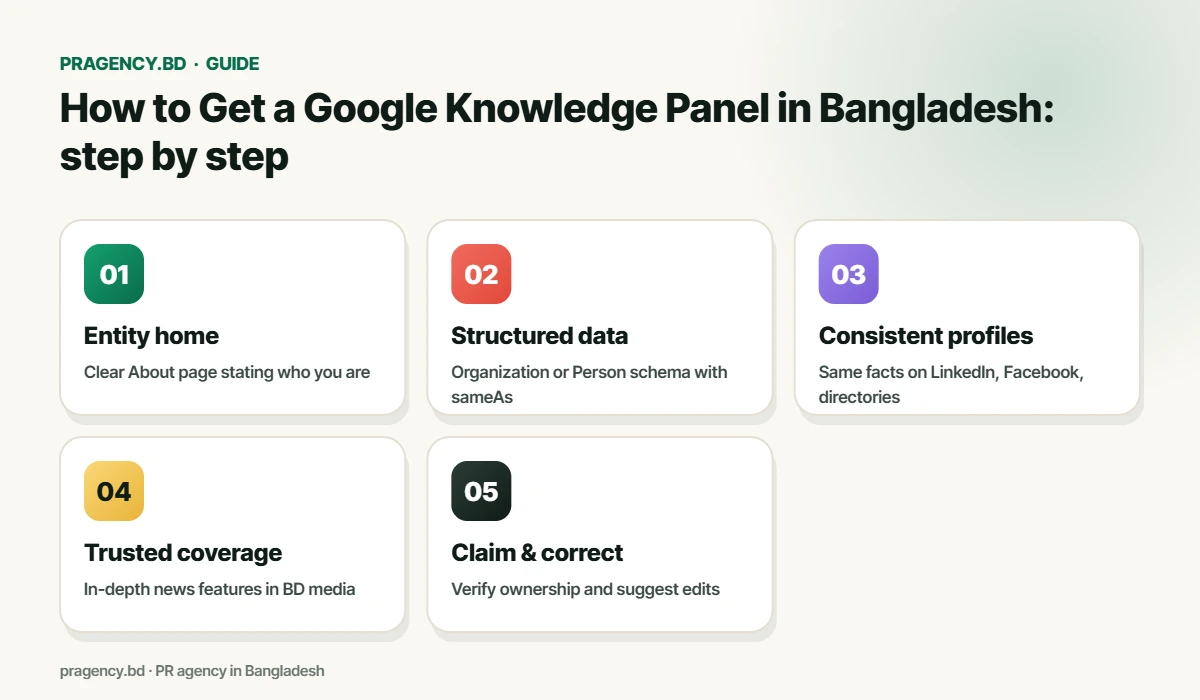
| Signal | What it means | How to build it |
|---|---|---|
| Entity home | A page that clearly states who you are | A detailed About page with consistent facts |
| Structured data | Machine-readable facts about you | Organization or Person schema with sameAs links |
| Consistent profiles | The same name and facts everywhere | Align LinkedIn, Facebook, directories and your site |
| Trusted coverage | Independent sources describe you | In-depth news features on established outlets |
| Reference sources | Encyclopaedic entries | Wikipedia and Wikidata where notability rules are met |
| Real searches | People look for your name | PR and visibility that create genuine interest |
Step 1: make your website the “entity home”
Google needs one page it can treat as the authoritative source about you. For a company that is usually the About page; for a person, a personal site or profile page. State plainly who you are, what you do, where you are based, when you started and your official profiles. Keep these facts identical everywhere else.
Step 2: add structured data
Structured data (schema markup) tells search engines facts in a format they read reliably. Companies use Organization or a more specific type; people use Person. The important part is the sameAs list, which links your official profiles: Facebook, LinkedIn, YouTube, Wikipedia if you have it, and other authoritative pages.
Step 3: clean up your profiles
Inconsistency confuses Google. If your Facebook page says one founding year and LinkedIn says another, or your name is spelled three ways, Google is less confident. Align names, descriptions, logos and key facts across every profile and business directory you control.
Step 4: earn trusted coverage
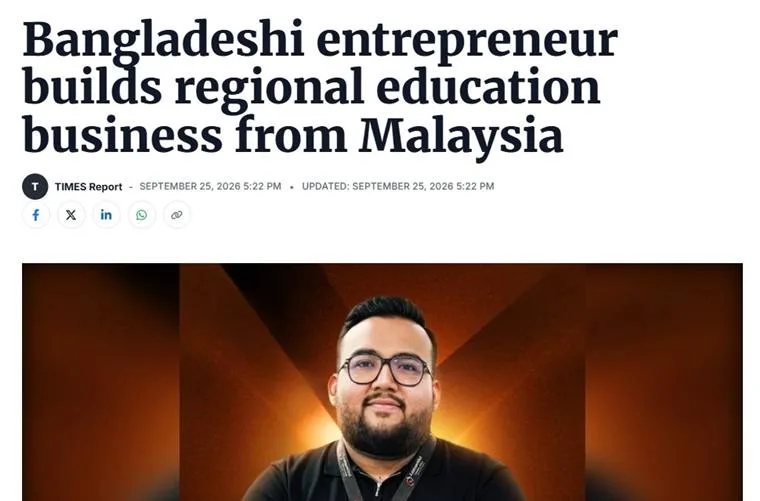
This is where PR matters most. In-depth, independent articles about you on established Bangladeshi publications are among the strongest signals. A detailed founder feature or interview does far more than dozens of thin mentions.
Step 5: claim and correct your panel
Once a panel appears, you can claim it through the “Claim this knowledge panel” link, verifying through an official account such as your website’s Search Console or a verified social profile. After verification you can suggest changes to facts, images and profiles.
Fixing a wrong panel
Panels go wrong for predictable reasons: an old article with outdated facts, a mix-up with someone who has a similar name, or a low-quality photo pulled from a random site. The fix is to correct the underlying sources first, then suggest edits. Editing the panel without fixing the sources usually does not last.
- You cannot buy a knowledge panel, but you can earn one.
- Make one page your clear “entity home” and add schema with sameAs links.
- Keep names and facts identical across every profile.
- In-depth Bangladeshi news coverage is a powerful signal.
- Claim the panel once it appears, then fix sources before suggesting edits.
How long does it take?
It depends on how much trusted information already exists. A brand with strong coverage and messy profiles can see a panel within weeks of cleaning up. A newer founder may need several months of CEO branding and features first.
See our Google Knowledge Panel service for how we help.
Example: a Dhaka founder without a panel
Consider a typical case. A founder in Dhaka runs a growing software company. Searching her name shows her LinkedIn profile, a few event pages and an old news mention that spells her name differently. Google has no single, confident picture of who she is, so no panel appears.
The fix follows a clear order:
- Create a founder page on the company website with her full name, role, short biography, photo and links to official profiles.
- Add Person schema to that page, with sameAs links to LinkedIn, Facebook and any interviews.
- Use exactly the same name spelling, title and photo across every profile.
- Earn two or three in-depth interviews or profiles in established Bangladeshi publications that mention her by the same name.
- Make sure the company’s Organization schema lists her as founder.
Within weeks to months of these steps, Google has a much clearer understanding, and a panel becomes far more likely.
Organisations versus people
| Entity type | Best entity home | Schema type | Strong extra signals |
|---|---|---|---|
| Company or brand | About page | Organization (or more specific type) | Business news coverage, consistent logo |
| Founder or CEO | Personal or founder page | Person | Interviews, profiles, speaking pages |
| Doctor | Chamber or hospital profile page | Person (with medical specialty in text) | Health interviews, hospital listings |
| NGO | About page | NGO or Organization | Programme coverage, reports |
| Public figure | Official website | Person | News coverage, verified social profiles |
How to write an About page Google understands
An About page for entity purposes is not marketing copy. It should state facts clearly in the first paragraph: who, what, where, since when. A good opening line looks like: “PRAGENCY.BD is a public relations agency based in Dhaka, Bangladesh, founded as part of the Markertion group.” Keep this sentence identical in spirit everywhere you describe yourself.
Bangla and English names
Many Bangladeshi entities have names that appear in both Bangla and English. Choose a primary spelling for each language and use it consistently. Include both in your structured data where appropriate, and avoid switching transliterations between profiles, which is one of the most common causes of confusion.
Search your name in an incognito window. If the top results disagree about your title, photo or company, Google is likely confused too.
Monitoring after the panel appears
Panels change. New articles, profile edits or someone else’s information can alter what Google shows. Check your panel monthly, keep your official pages updated and suggest corrections through the claimed panel when needed. For founders and public figures, combine this with ongoing CEO branding so that new, accurate coverage keeps reinforcing the right facts.
Frequently asked questions
Can I pay Google for a knowledge panel?
No. Google generates panels automatically. You can only build the signals that make one more likely.
Do I need a Wikipedia page for a panel?
No, but Wikipedia and Wikidata are strong sources when notability rules are met.
How do I change the photo in my panel?
Claim the panel, then suggest a new image. Making sure your preferred photo appears on your official pages helps.
Does Bangla coverage count?
Yes. Coverage in established Bangla publications is a valid, trusted source.
Want Google to show the right facts about you?
Talk to our Bangladesh PR team about your story, the right media and a realistic plan.
Book a Free 30-Minute PR Consultation or get a quote →